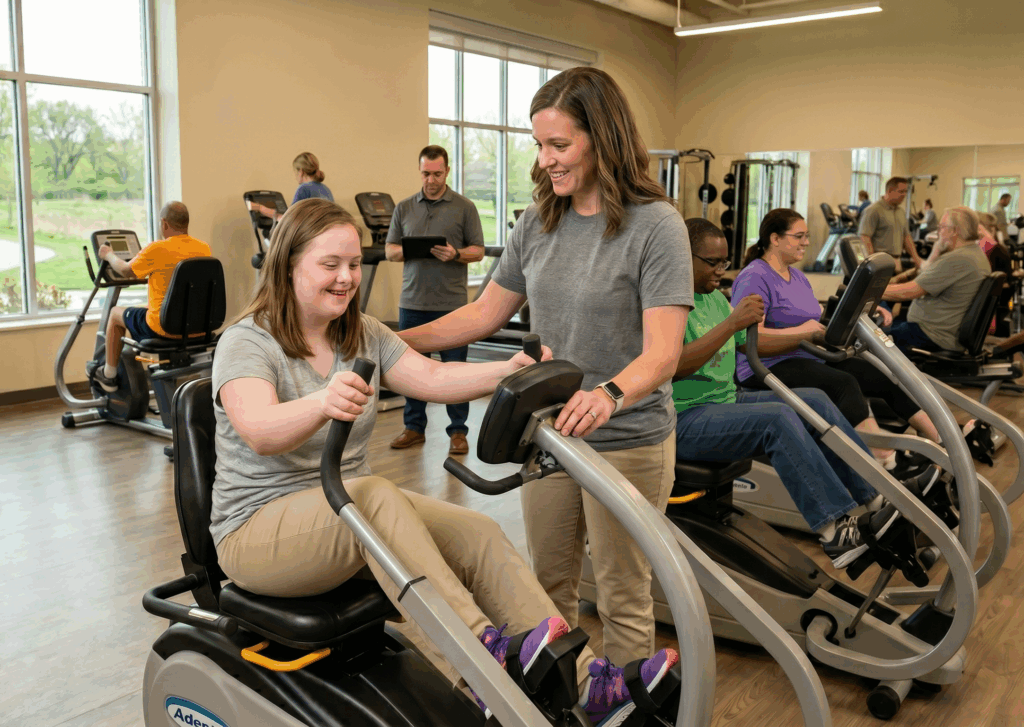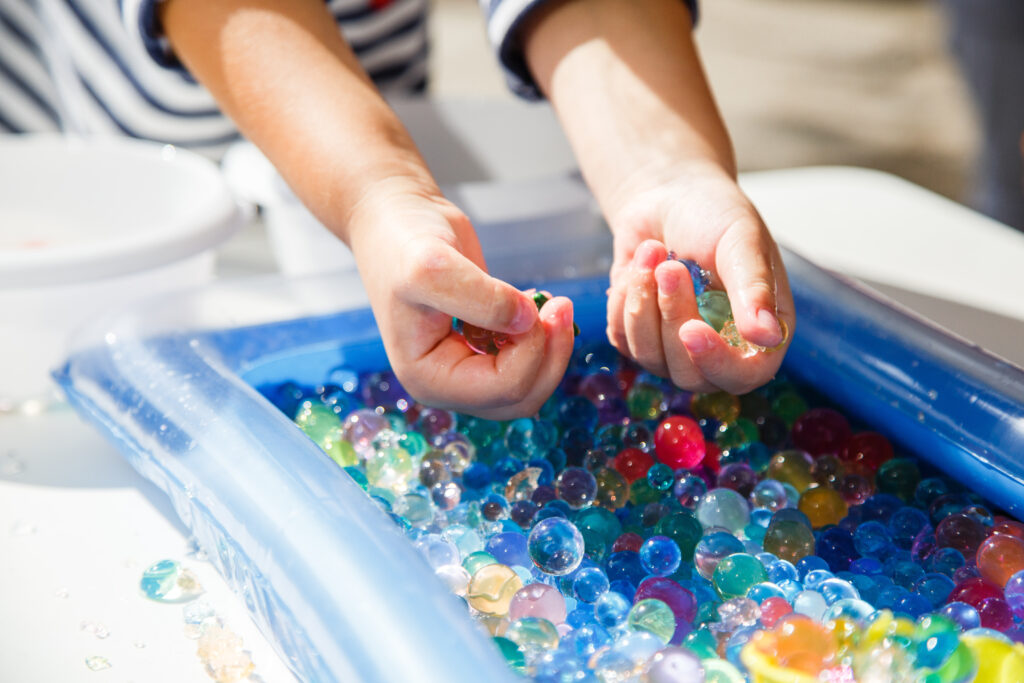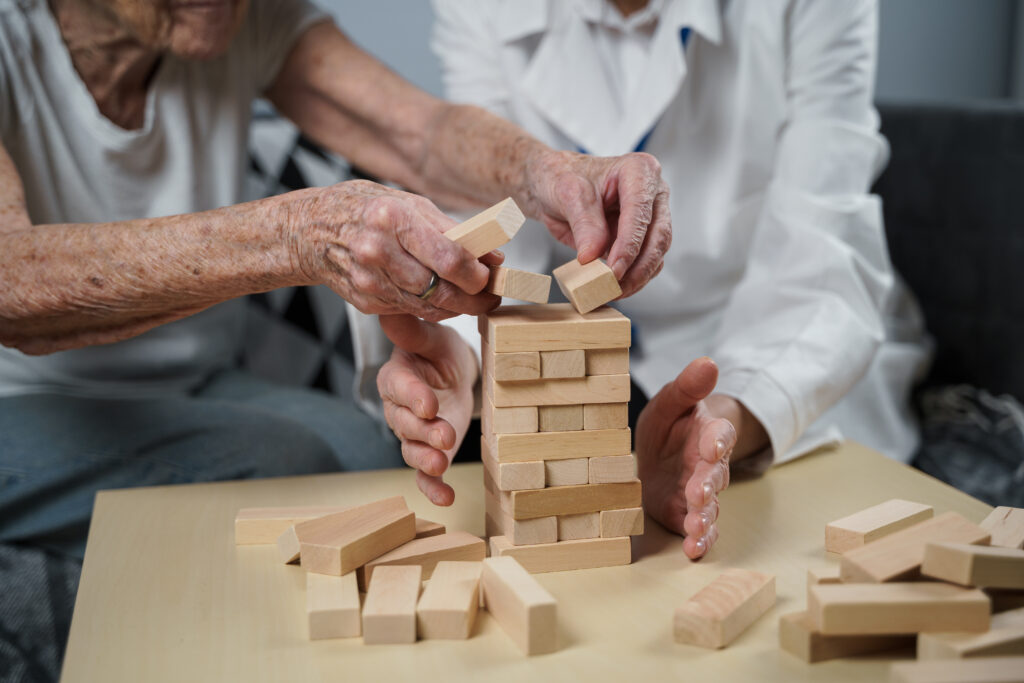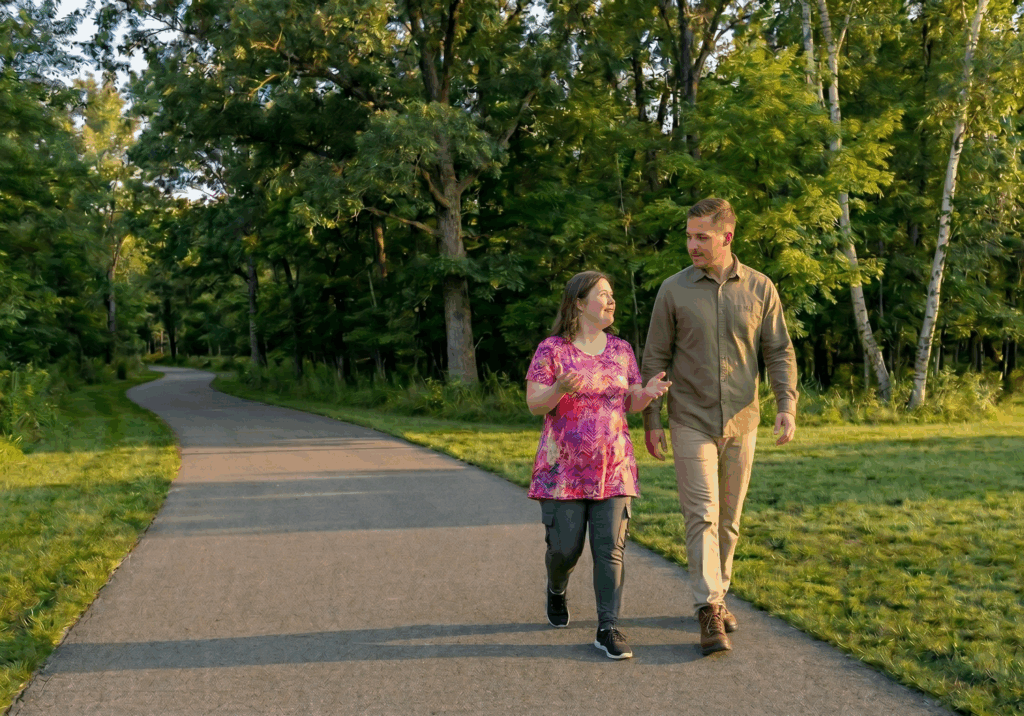
Recreational therapy, also known as therapeutic recreation, is a systematic process that utilizes recreation and other activity-based interventions to address the assessed needs of individuals with illnesses and/or disabling conditions, as a means to psychological and physical health, recovery and well-being.
The purpose of the RT process is to improve on the 5 domains of Recreational Therapy. These include physical, spiritual, artistic, intellectual and social and sensory domains in order to facilitate full participation in life. Services are provided or directly supervised by a “Certified Therapeutic Recreation Specialist” (CTRS).
Recreational therapy includes, but is not limited to, providing treatment services and recreation activities to individuals using a variety of techniques including arts and crafts, animals, sports, games, dance and movement, drama, music, and community outings. Recreational therapists treat and help maintain the physical, mental, and emotional well-being of their clients by seeking to reduce depression, stress, and anxiety; recover basic motor functioning and reasoning abilities; build confidence; and socialize effectively. Recreational therapists should not be confused with recreation workers, who organize recreational activities primarily for enjoyment.